
The other day I was scrolling through social media for one of my clients when something jumped out at me. Post after post looked like it had been created with ChatGPT or another AI image generator. It wasn’t just one business either. It was everywhere.
That got me thinking. Maybe it’s time to talk about the elephant in the room.
As someone who makes a living through branding, graphic design, and web design, I’ll be honest… AI has been intimidating. When your business is built around helping small businesses look professional and stand out, it’s hard not to see AI as a threat.
It promises quick, inexpensive visuals to businesses that either can’t afford professional design or simply don’t see the value in paying for it.
But after watching more and more businesses rely on AI-generated graphics, I’ve started wondering if it’s actually costing them more than they’re saving.
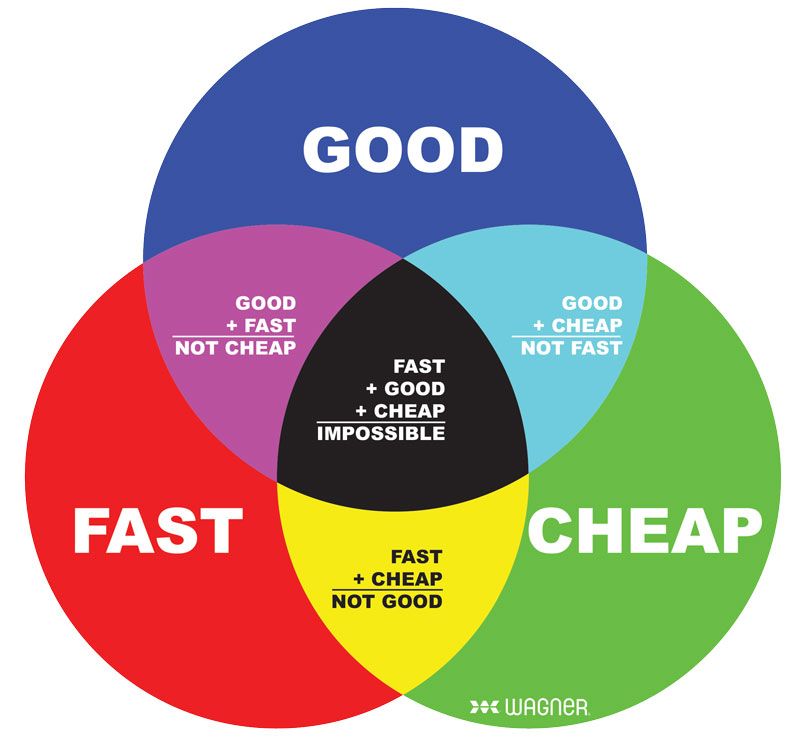
There’s an old saying that you can only pick two: good, fast, or cheap.
AI checks two of those boxes really well. It’s fast. It’s cheap.
Good? That’s where things get a little questionable.
From what I’ve seen, AI-generated visuals have some pretty significant weaknesses, and if you’re using them without understanding those limitations, your brand could actually be taking a step backwards.
1. No Visual Identity Consistency
This is probably the biggest issue I see.
Most people don’t know how to write the detailed prompts needed to get consistent results from AI. Every time they generate a new graphic, it feels like starting over.
One post has one style. The next looks completely different. Different colours. Different fonts. Different layouts. Different illustration styles.
That might not seem like a big deal, but branding is built on repetition.
People remember businesses because they repeatedly see the same colours, the same typography, the same visual style, and the same overall feel. When those things constantly change, your audience has to relearn who you are every time they see your content.
Inconsistency also chips away at trust. Whether people realize it or not, a business that looks organized feels more established. A business with mismatched graphics can come across as rushed, inexperienced, or simply unprofessional.
There’s also the practical side of it.
When every graphic starts from scratch, you’re spending more time creating content than you need to. A solid brand system makes future marketing easier because you’re building from templates, guidelines, and established assets instead of reinventing everything every week.
That’s where professional designers come in.
Good design isn’t just making something look nice. It’s building a system that works across everything your business creates. We take your logo, colours, typography, photography, and layouts, then turn them into something consistent that customers recognize instantly.
Even businesses that think they don’t really have a brand usually have the pieces already. Our job is putting those pieces together into something people remember.
2. They All Look So Similar
This one really stood out to me recently.
I manage social media for a golf course, so I’m always watching what other courses are posting. It’s a great way to spot trends and see what other facilities are doing well.
Lately, though, I’ve noticed something different. Several golf courses were posting graphics that looked almost identical. The layouts were similar. The colours felt the same. The imagery had the same polished AI look. If you removed the logos, you’d have a hard time knowing which business created which post.
That’s one of AI’s biggest weaknesses.
When multiple businesses use similar prompts, AI pulls from many of the same visual references. The result is content that blends instead of standing apart.
Your logo alone isn’t enough to make your business memorable.
If your customers can’t immediately recognize your content while they’re scrolling, you’ve already lost one of the biggest advantages social media can give you.
Standing out on social media has always been difficult. It’s becoming even harder when everyone is creating content from the same tools.
Professional designers, photographers, web designers, and drone pilots create assets that belong to your business, not everyone else’s. Over time, that gives you a library of original content that’s unique to your company and impossible for competitors to copy.
When more businesses are beginning to look alike, being different becomes even more valuable.
3. Too Much Information, Designs Become Too Busy
AI also struggles with priorities.
It doesn’t naturally know what’s important unless you tell it.
If you feed it every detail about your sale, event, or service, it’ll usually try to include every single one.
The result?
- A huge headline.
- Multiple icons.
- Cluttered background graphics.
- Excessive decorative elements.
- Lists of information crammed into the bottom of the design.
Everything competes for attention. Nothing actually gets it.
Good design isn’t about fitting everything onto one graphic. It’s about helping someone’s eyes land exactly where you want them to.
Professional designers understand visual hierarchy. We know what should be seen first, second, and third. We know when to simplify, when to remove elements, and when less actually communicates more.
AI doesn’t naturally think that way.
This creates another problem, and that is scalability. Most people will see your social media graphics on a phone. If you’ve packed every event detail into one image, chances are half the text is too small to read.
And let’s be honest. Almost nobody is pinching and zooming into Facebook or Instagram graphics.
People scroll quickly. You have a couple of seconds to catch their attention before they’re gone. A cluttered design usually loses that battle.
4. What Message Does it Send?
This one is a little more subjective, but it’s worth thinking about.
There’s been a lot of discussion online about what using AI for creative work says about a business. Yes, many of those conversations are happening within the creative industry, and I’m part of that industry.
But I think some of the questions are fair.
- Does it suggest your business takes shortcuts?
If you’re copying and pasting information into ChatGPT, accepting the first result, and posting it without much thought, people notice. Maybe not everyone. But enough people do. It can give the impression that your marketing is an afterthought. And if customers wonder whether shortcuts are showing up in your marketing, it’s not a huge leap for them to wonder if they’re showing up elsewhere too. That’s not a message most businesses want to send. - Does AI help you stand out? Usually, no, but AI builds from patterns that already exist. If you’re using the same prompts as your competitors, you’re likely getting similar results. That makes it harder for customers to remember you and easier for you to disappear into the crowd.
AI May NOT be the Enemy
Now, before anyone thinks I’m completely against AI, I’m not. I use AI. I think it can be an incredible tool. The problem isn’t AI itself. It’s how people use it. Like any tool, it works best when someone knowledgeable is guiding it and in certain situations or stages of a specific project. Right now, a lot of businesses are expecting AI to replace experience instead of enhance it.
That’s the mistake.
If you’re planning to use AI for social media graphics, flyers, websites, or other marketing materials, spend some time learning how these tools actually work. Don’t just rely on ChatGPT because it’s familiar. Explore tools built specifically for design and image generation. Learn prompting. Learn editing. Learn where AI succeeds and where it falls short.
The better you understand the tool, the better your results will be.
Creative Professionals are still the #1 Solution
If you’d rather skip that learning curve altogether, that’s exactly where creative professionals will always provide you the most value. People sometimes think hiring a designer means you’re just paying someone to make things look nice. Honestly, that’s only a small part of it.
A good designer is a problem solver and communication expert, as much as they are an artist.
It isn’t just picking a nice colour palette or a font that looks modern. It’s figuring out how your business should feel every time someone interacts with it. Whether they’re looking at your Facebook page, walking into your office, opening your website, or seeing your truck drive down the road, it should all feel connected. That’s how businesses become recognizable.
Creative professionals also think beyond a single project. We’re looking at the bigger picture. How does this advertisement fit your overall brand? Does this website feel like the same company people saw on social media? Are your brochures, business cards, signage, email campaigns, and online presence all telling the same story?
Building trust, recognition, and a brand people actually remember. That still takes a human.
There’s also the value of experience.
Most creative professionals have spent years learning things that clients never even see. Design principles. Marketing. Colour theory. Typography. User experience. Photography. They know how to answer questions like: how people read. How people scan a webpage. How people make decisions. Those skills don’t show up as a flashy feature on a website, but they’re behind every design decision we make.
And that’s where experience really starts paying for itself.
I know hiring a creative professional costs more than opening ChatGPT and asking it to make a graphic. There’s no point pretending otherwise.
But I’ve also seen businesses spend years slowly building a brand people trust, only to start filling their social media with generic AI graphics that don’t match anything they’ve built. Before long, everything starts feeling disconnected. The personality disappears. The business starts looking like everyone else.
That’s a much more expensive mistake than hiring someone to do it properly the first time.
You’ll probably never know it happened. Followers will leave. Sales will dip. Goals won’t be met.
That’s the cost most businesses don’t think about.
AI is getting better every day. I don’t think anyone can argue that. But it needs to be used as a tool, not as the one making the decisions. It can help speed up part of the process, generate ideas, or get past creative blocks. It still takes someone with experience to know what’s worth keeping, what should be changed, and what actually fits the business sitting in front of them.
Sure, AI can create an image, but a creative professional builds something people remember.
And there’s a big difference between those two things.